
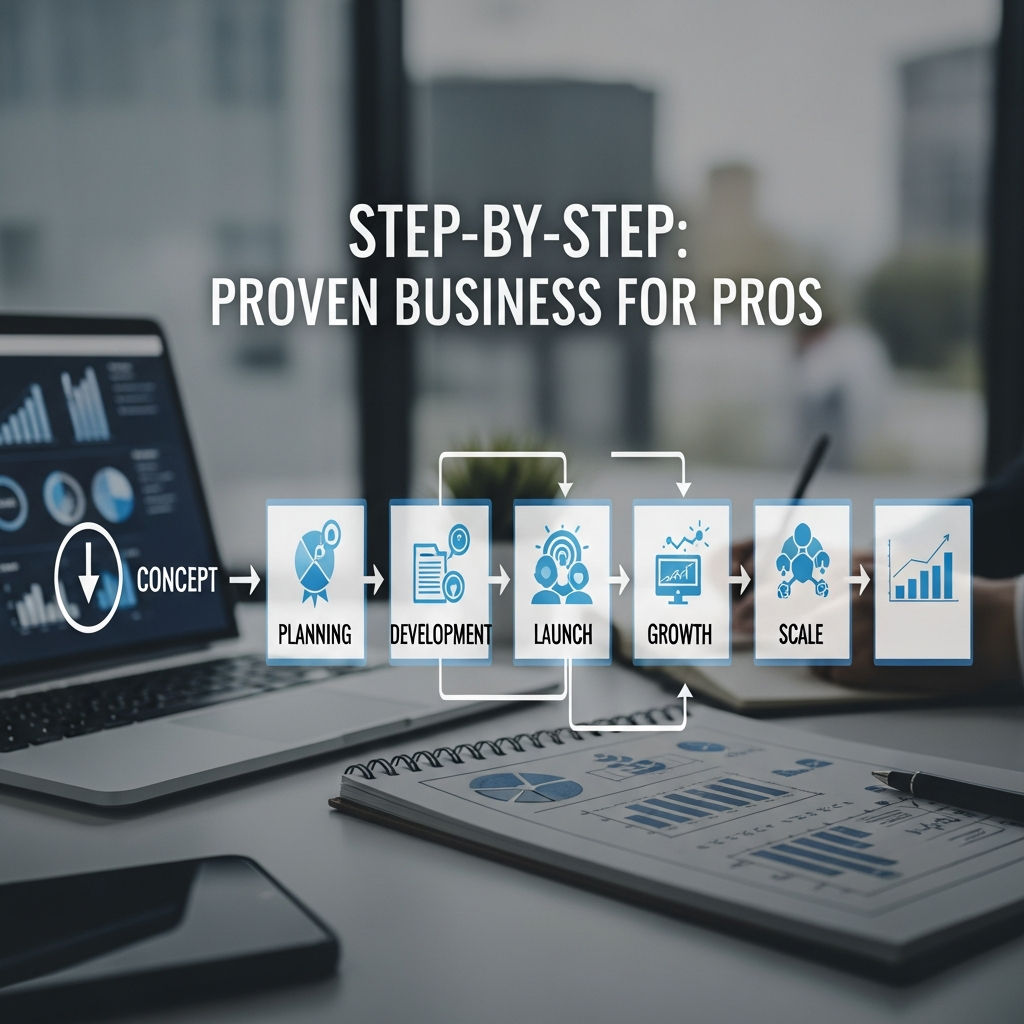
Step-by-Step: Proven Business for Pros – Your Guide to High-Probability Success
For the seasoned professional, the accomplished executive, or the serial entrepreneur, the allure of a new business venture is often tempered by a desire for predictability and a higher probability of success. You’ve honed your skills, navigated complex corporate landscapes, and built an impressive network. Now, you’re ready to leverage that expertise into your own enterprise, but not just any enterprise – a proven business model that minimizes risk and maximizes return. This isn’t about trial-and-error startups; it’s about strategic acquisition and masterful execution.
This comprehensive, step-by-step guide is designed for the “pro” – someone who understands the value of a solid foundation and a clear roadmap. We’ll explore how to identify, evaluate, acquire, and scale businesses that have already demonstrated their viability, allowing you to focus your energy on growth and optimization, rather than reinventing the wheel.
Why Proven Businesses Attract Experienced Professionals
Experienced professionals are naturally drawn to proven business models for several compelling reasons. Unlike the high-risk, high-reward gamble of a startup, a proven business offers an established framework, reducing the uncertainty associated with market validation, product-market fit, and initial brand building. This translates into several distinct advantages:
- Reduced Risk: Proven models come with historical data, existing customer bases, and a track record of profitability, significantly lowering the inherent risks of launching a new venture.
- Leverage Existing Strengths: Your executive, management, or technical skills are immediately applicable to optimizing and scaling an existing operation, rather than building one from scratch.
- Faster Time to Profitability: With established systems, a customer base, and revenue streams, the path to positive cash flow is often much quicker.
- Scalability Potential: Many proven businesses, especially franchises or well-structured independent companies, offer clear pathways for expansion and growth.
- Access to Funding: Lenders are often more comfortable financing a business with a proven track record, making capital acquisition smoother.
This approach allows you to step into a going concern, apply your professional acumen, and drive it to new heights, bypassing many of the initial hurdles that deter less experienced entrepreneurs.
Step 1: Self-Assessment & Strategic Alignment – Defining Your Entrepreneurial Blueprint
Before you even begin scouting opportunities, the first and most critical step for any professional is a rigorous self-assessment. Your success will hinge on aligning your unique strengths, passions, and financial goals with the right business type.
Define Your “Professional Edge”
Consider what makes you exceptional. What specific skills, experiences, and networks have you cultivated throughout your career?
- Core Competencies: Are you a master of operations, a marketing genius, a sales wizard, or a financial strategist? Pinpoint your strongest functional areas.
- Industry Expertise: Do you have deep knowledge in a particular sector (e.g., healthcare, tech, manufacturing, retail)? This industry insight can be invaluable.
- Network Capital: Who do you know? Your professional connections can open doors, provide mentorship, or even become clients.
- Capital Resources: What financial resources (personal savings, investment capital, access to credit) are you willing and able to commit?
Lifestyle & Financial Goals
Your business should serve your life, not consume it entirely (unless that’s your goal!).
- Work-Life Balance: Are you seeking a venture that offers flexibility, or are you prepared for an all-consuming commitment?
- Income Targets: What level of income do you require or desire from your business in the short, medium, and long term?
- Exit Strategy: Do you envision building a legacy business, or do you want to grow and sell within a specific timeframe? Understanding your endgame influences your initial choices.
- Personal Passions: While a proven business reduces risk, aligning with a sector or service you genuinely care about will fuel your motivation.
This foundational self-analysis will create a robust filter, ensuring you only consider opportunities that resonate with your professional identity and personal aspirations.
Step 2: Identifying “Proven” Business Models – Where to Find Success
With your entrepreneurial blueprint in hand, it’s time to explore the diverse landscape of proven business models. These typically fall into several categories, each with its own advantages for the experienced professional.
Franchise Systems
Franchising is arguably the most common and accessible pathway to a proven business. You’re buying into an established brand, a tested operational model, comprehensive training, and ongoing support.
- Benefits: Brand recognition, ready-made marketing strategies, supply chain efficiencies, peer support from other franchisees, and often lower failure rates.
- Types: From quick-service restaurants and fitness centers to specialized business services and senior care, the range of franchise opportunities is vast.
- Due Diligence: Scrutinize the Franchise Disclosure Document (FDD) meticulously, speak to current and former franchisees, and understand all fees and contractual obligations.
Acquiring an Existing Independent Business
Buying an established business gives you immediate cash flow, an existing customer base, trained staff, and established vendor relationships. It’s like stepping onto a moving train rather than building the tracks.
- Benefits: Instant operational status, existing goodwill, potential for immediate profit, and the ability to put your own stamp on an already functional entity.
- Finding Opportunities: Business brokers, online marketplaces (e.g., LoopNet, BizBuySell), industry associations, and networking are key channels.
- Key Considerations: Valuation is crucial. You’ll need to assess the business’s financial health, reason for sale, market position, and potential for growth.
Licensing & White-Label Opportunities
This model allows you to leverage existing products, services, or technologies under your own brand or through a licensing agreement. It’s often found in software, certain product lines, or structured service offerings.
- Benefits: Reduced development costs and time, proven product/service quality, and the ability to customize branding and sales strategies.
- Examples: Software-as-a-Service (SaaS) white-label solutions, licensed educational programs, or branded consumer goods manufactured by a third party.
- Focus: Your expertise shifts from product creation to marketing, sales, and customer service.
Scaling a Successful Niche
If you already possess deep knowledge within a specific, profitable niche, this strategy involves identifying a successful model within that niche and replicating or expanding it. This could be a specialized consulting firm, a unique service offering, or a focused product line.
- Benefits: Leveraging existing market insights, building on proven demand, and often requiring less capital than entering an entirely new market.
- Strategy: Involves meticulous market research to identify successful players, understanding their operations, and developing a superior execution plan for expansion or replication.
- Innovation within Proven: While proven, there’s still room for strategic innovation to optimize and differentiate.
Step 3: Deep Dive Due Diligence & Validation – The Professional’s Critical Eye
This is where your professional experience truly shines. Due diligence for a proven business is more than just checking boxes; it’s about forensic analysis and critical thinking to uncover both opportunities and potential pitfalls.

Financial Scrutiny
Go beyond the surface-level numbers. Engage experienced accountants and financial analysts.
- Analyze Financial Statements: Thoroughly review profit & loss statements, balance sheets, and cash flow projections for the past 3-5 years. Look for trends, inconsistencies, and red flags.
- Verify Revenue & Expenses: Cross-reference income with bank statements, tax returns, and customer invoices. Scrutinize expense categories for inflated or hidden costs.
- Understand Working Capital Needs: Assess the ongoing capital required to run the business smoothly and support growth.
- Future Projections: Critically evaluate the seller’s growth projections and create your own conservative models.
Operational & Market Validation
Dig into the day-to-day workings and the business’s external environment.
- Operational Review: Understand all key processes, supplier relationships, inventory management, and technology infrastructure. Identify areas for immediate improvement.
- Customer Base Analysis: Who are the customers? Are they diversified or heavily reliant on a few key clients? Assess customer retention rates and acquisition costs.
- Market & Competition: Conduct independent market research. Analyze industry trends, competitive landscape, and barriers to entry. Is the “proven” model still relevant and robust for the future?
- Talk to Stakeholders: Where possible and appropriate, speak with employees, key suppliers, and even customers (discreetly) to gain candid insights. For franchises, talk to multiple franchisees.
Legal & Regulatory Review
Protect yourself from hidden liabilities.
- Contracts: Review all critical contracts, including leases, supplier agreements, employment contracts, and customer agreements.
- Compliance: Ensure the business is fully compliant with all local, state, and federal regulations, licenses, and permits.
- Intellectual Property: Verify ownership of trademarks, patents, copyrights, and trade secrets.
- Litigation History: Investigate any past or pending lawsuits or legal disputes.
Never skip engaging legal and financial professionals during this phase. Their objective expertise is invaluable.
Step 4: Securing Funding & Structuring the Deal – The Professional Negotiation
Your experience provides a distinct advantage in navigating the financing and negotiation aspects of acquiring a proven business.
Capital Sources for Pros
You have access to a broader range of funding options than a novice entrepreneur.
- Personal Capital: Leverage your own savings or investments, but ensure you maintain an emergency fund.
- SBA Loans: The Small Business Administration (SBA) guarantees loans can make it easier for banks to lend, often with favorable terms.
- Conventional Bank Loans: With a strong business plan, personal financial history, and a proven business, traditional bank financing is a viable option.
- Seller Financing: Often, sellers are willing to finance a portion of the sale, demonstrating their confidence in the business and reducing your upfront capital.
- Private Equity/Angel Investors: For larger acquisitions or businesses with significant growth potential, your professional network might lead to private investment.
Negotiation & Deal Structuring
This is where your professional negotiation skills come into play.
- Letters of Intent (LOI): Start with a non-binding LOI to outline key terms before committing to a full purchase agreement.
- Valuation Adjustments: Be prepared to negotiate based on your due diligence findings, potentially adjusting the purchase price for discovered liabilities or missed opportunities.
- Contingencies: Ensure the purchase agreement includes contingencies for financing, final due diligence, and any necessary approvals.
- Post-Sale Support: Negotiate a transition period with the seller, including training and consulting to ensure a smooth handover.
Step 5: Transition, Optimization, and Growth – Applying Your Professional Acumen
Once the deal is closed, your true work begins: seamlessly transitioning into ownership, optimizing the existing operations, and strategically driving growth. This is where your professional experience elevates a proven business to new heights.
Seamless Takeover
A smooth transition is paramount to retaining value and momentum.
- Employee Retention: Identify key personnel and communicate openly about the transition to minimize anxiety and retain valuable talent.
- Customer Communication: Reassure existing customers of continuity and introduce yourself as the new owner, highlighting your vision for enhancement.
- Operational Handover: Work closely with the seller during the agreed-upon transition period to understand all systems, processes, and relationships.
- Supplier & Partner Relations: Maintain strong relationships with existing suppliers and strategic partners.
Professional-Level Optimization
This is your opportunity to leverage your leadership and management skills.
- Process Improvement: Apply lean methodologies, data analytics, and operational excellence principles to streamline existing workflows and boost efficiency.
- Technology Integration: Evaluate and implement new technologies (CRM, ERP, marketing automation) to enhance productivity, customer experience, and decision-making.
- Strategic Marketing: Develop sophisticated marketing strategies, leveraging digital channels and data-driven insights to expand reach and attract new customers.
- Financial Management: Implement robust financial controls, forecasting, and reporting to drive profitability and ensure fiscal health.
Strategic Growth & Scaling
Once optimized, focus on expanding the business’s footprint and profitability.
- Market Expansion: Identify new geographic markets or demographic segments where the proven model can be successfully replicated.
- Product/Service Diversification: Explore complementary offerings that align with your existing customer base and operational capabilities.
- Franchising Out (if applicable): If you’ve acquired a highly replicable independent business, consider franchising it as a growth strategy.
- Mergers & Acquisitions: Look for opportunities to acquire smaller, complementary businesses to consolidate market share or expand capabilities.
Conclusion: The Professional’s Advantage in Proven Business
Embarking on a business venture as a seasoned professional using a proven model is not merely about starting a business; it’s about making a strategic investment in your future. By meticulously following these steps – from deep self-assessment and rigorous due diligence to skillful acquisition and advanced optimization – you significantly increase your probability of success.
Your unique blend of experience, network, and financial acumen positions you perfectly to not just run a proven business, but to transform it, scale it, and ultimately, carve out a legacy of your own. This path offers the challenge and reward of entrepreneurship with the stability and foundation that only a proven framework can provide. It’s time to leverage your professional prowess and embark on your next successful venture.