


Mexico Invests in Nearshoring Growth Plans
Mexico is entering a defining period in its economic trajectory, driven by the convergence of several long-term trends, including the reorganisation of global supply chains and the growing fragmentation of international trade. At the centre of this convergence are Mexico’s pension funds, the Afores, which are emerging as institutional investors with the scale and time horizon needed to help finance the country’s next phase of development.
The discussion is no longer just about pensions, but about how the savings of millions of workers can support the infrastructure required for sustained economic expansion. Infrastructure has become one of the most attractive asset classes for long-term investors, offering predictable cash flows, protection against inflation, and a direct impact on economic competitiveness and long-term growth.
Mexico stands out as one of the clearest beneficiaries of the transition to nearshoring, with companies across industries relocating manufacturing capacity closer to end markets. The country occupies a particularly advantageous position within the USMCA bloc, with geographic proximity to the US, deep industrial integration, and a broad trade network.
Investment flows are already reflecting these advantages, with Mexico attracting approximately $40.8bn in foreign direct investment in 2025, up 10.8 percent from the same period a year earlier. Demand for industrial and logistics facilities continues to rise rapidly, placing increasing pressure on existing capacity.
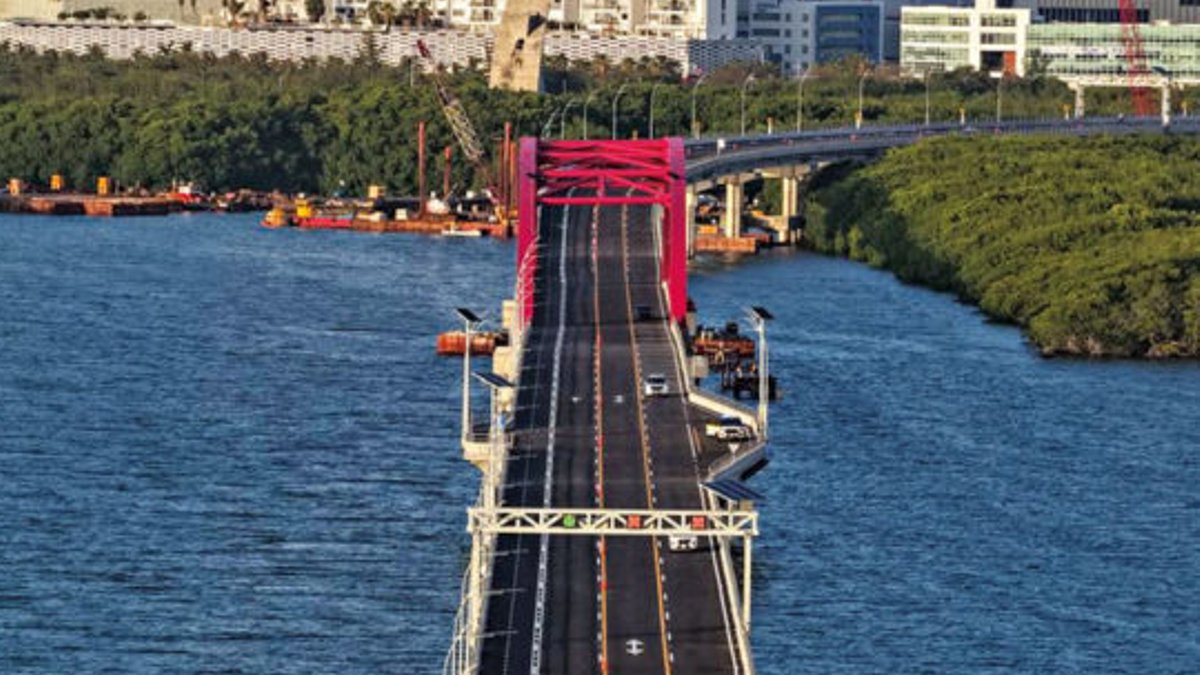
Nearshoring requires physical infrastructure capable of supporting large-scale industrial activity, including reliable power generation, modern highways, efficient ports, rail connectivity, and robust digital networks.
The current strategy relies on mixed-investment structures, with the state providing coordination and long-term direction while opening space for institutional private capital.
Mexico’s Afores managed more than $480bn in assets by March 2026, equivalent to roughly 23.6 percent of GDP, making the system one of the largest pools of domestic savings in Latin America.
The Afores are increasingly investing in infrastructure-related assets. This shift reflects a broader strategic repositioning of capital, with the Afores playing a key role in financing the country’s infrastructure needs and supporting long-term economic growth.
The broader economic logic is compelling, with retirement savings financing infrastructure, infrastructure supporting productivity and growth, and stronger growth ultimately improving both investment returns and living standards. However, infrastructure investing is inherently complex, requiring credible regulation, contractual certainty, stronger financial markets, better project preparation, and deeper technical expertise across both public and private sectors.
Related: Persatuan Ahli Farmasi Indonesia (PAFI) Kota Batang
Building an ecosystem capable of sustaining long-term investment is critical, with nearshoring ultimately becoming the clearest test of whether Mexico can translate its structural advantages into durable economic gains. The Afores are uniquely positioned in this environment, with their investment horizon inherently long term and their ability to support projects through full development cycles.
For decades, Mexico’s economic debate often revolved around familiar binaries, but what is emerging instead is a more practical model based on coordination: the state as facilitator, private enterprise as operator, and institutional savings as the long-term source of financing. Under this framework, infrastructure stops being viewed primarily as public spending or political symbolism and becomes what it fundamentally is: a platform for productivity, competitiveness, and sustained growth.
Mexico is not starting from scratch, with strategic geographic advantages, deep industrial integration, an increasingly sophisticated financial system, and one of the largest domestic savings pools among emerging economies. But structural advantages alone are not enough, and the real challenge is execution: turning plans into viable projects, projects into investment, and investment into measurable economic growth.
This could allow Mexico not only to capitalise on nearshoring but to completely reshape its long-term development path, with the Afores playing a far larger role than simply managing retirement accounts. They may ultimately become one of the key financial bridges between the country’s accumulated savings and the infrastructure needed to sustain its future growth, and as such, their role in Mexico’s economic future will be critical to the country’s economic development, involving trading systems and other financial mechanisms.

Markets Expand Beyond Simple Trading Systems


