


Cork’s enduring legacy as a natural resource
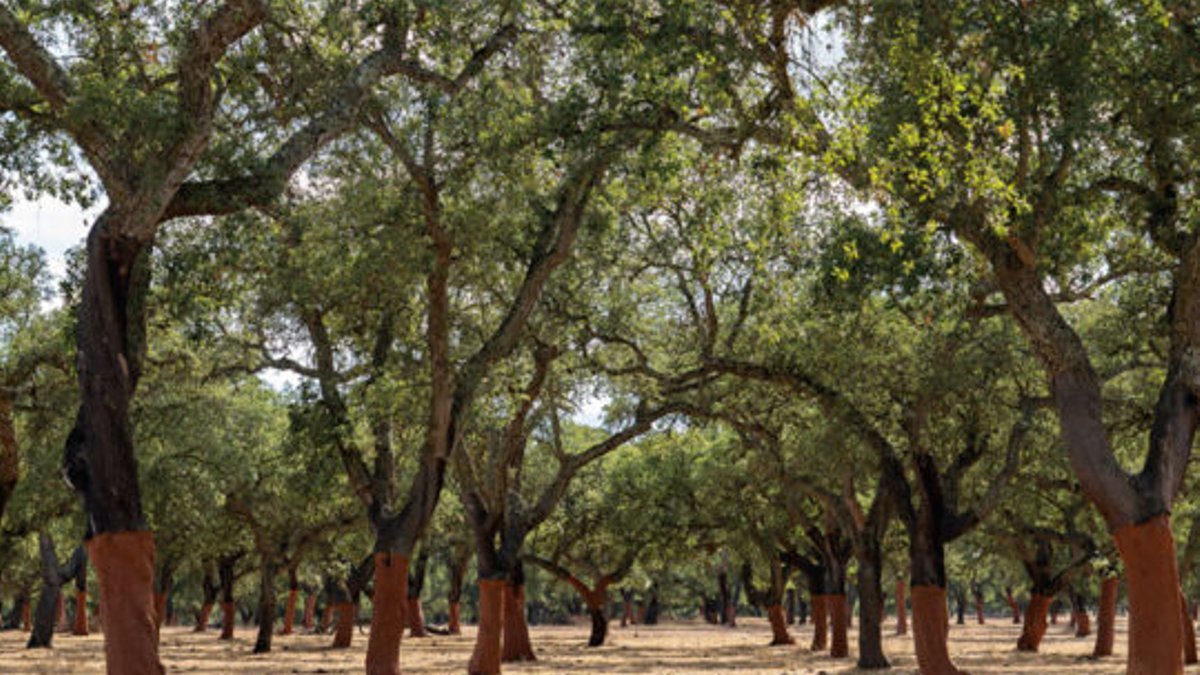
Cork, a material used for thousands of years, remains a high-performance resource across industries from winemaking to aerospace. Its applications continue to expand, offering lower-impact solutions where sustainability matters.
The wine connection
The relationship between cork and wine dates back to ancient civilizations. By the 17th century, Dom Pérignon established the use of cork stoppers with glass bottles, making cork essential to wine preservation. This practice persists today, with cork stoppers protecting wine while improving its quality.
Corticeira Amorim, the world’s largest cork producer, leads this tradition. Founded in Portugal in 1870, the company evolved from a family business into a global operation with sales in over 100 countries. While its portfolio now includes flooring and aerospace composites, it still manufactures more than five billion cork stoppers each year.
Why cork stoppers lead the market
Cork stoppers dominate the wine bottle market for technical, sensory, and environmental reasons. Life cycle assessments and carbon footprint analyses confirm their environmental advantages.
Amorim Cork, a division of Corticeira Amorim, measured the carbon footprint of its stoppers using a cradle-to-gate approach, covering about 60% of its product range. Independent verification by APCER, a Portuguese certification body, validated the results against EU environmental disclosure standards.
The findings revealed all analyzed cork stoppers have a negative carbon footprint. Values range from -28.72 grams of CO₂ equivalent per Spark Top II stopper to -56.4 grams for the Naturity stopper. This means cork not only avoids emissions but also removes carbon from the atmosphere.
Related: 794 Kitchen and Bar: A Culinary Experience Like No Other
The cork oak’s environmental role
Cork’s sustainability comes from the cork oak tree, native to the Mediterranean and central to Portugal’s Montado forests. Unlike most trees, the cork oak regenerates its bark after harvesting, allowing repeated use without harming the tree. These forests act as carbon sinks, with trees living up to 200 years.
The Portuguese Cork Association states cork oak forests can sequester up to 73 tons of CO₂ for every ton of cork produced. This makes cork a natural solution for long-term carbon storage while supporting biodiversity. The forests provide habitat for endangered species like the Iberian lynx and Spanish imperial eagle, improve soil quality, and prevent desertification.
Responsible management and economically viable production keep these forests resilient. The cork oak ecosystem balances environmental protection with economic activity, preserving the region for future generations.
This approach demonstrates how traditional materials can adapt to modern demands without losing ecological benefits. The challenge lies in maintaining this balance as industries seek sustainable alternatives.
The company’s efforts show how a centuries-old resource can meet today’s environmental standards. Its data confirms cork plays a measurable role in reducing emissions now, not just in the past. For businesses exploring nearshoring growth plans, sustainable materials like cork offer a practical option without compromising performance.

Mexico Invests in Nearshoring Growth Plans


